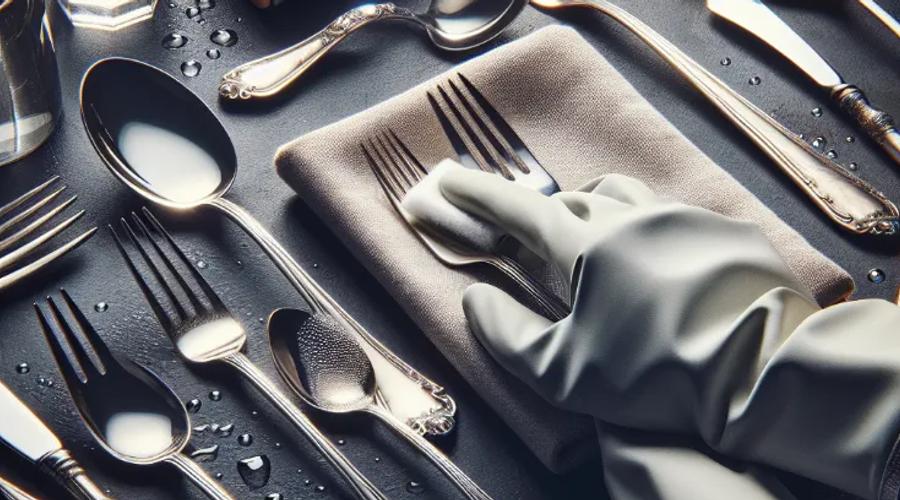
Clean silverware by soaking it in warm water with a few drops of mild dish soap, gently scrubbing with a soft sponge or cloth, rinsing thoroughly, then polishing with a proper silver polish and drying immediately. Regular light cleaning after use, plus occasional deep polishing, prevents heavy tarnish building up and keeps silverware looking its best.
What do you need to clean silverware?
You only need a handful of basic supplies to clean most silverware safely at home.
- Mild dish soap
- Warm water
- A soft sponge or microfiber cloth
- Silver polish (for deeper shine)
- A soft-bristled brush for engraved or ornate details
- A clean, dry cloth for buffing
Avoid anything abrasive, such as scouring pads or gritty cleaning powders, as these can scratch the soft surface of silver.
How do you clean silverware step by step?
The safest approach is to soak, wash gently, rinse, dry, and only polish when tarnish has actually built up.
- Sort first. Separate silverware by tarnish level so heavily tarnished pieces get extra attention and lightly tarnished pieces aren't over-polished.
- Soak. Fill a basin with warm water and a few drops of mild dish soap, then leave the silverware to soak for 5–10 minutes to loosen dirt and loose tarnish.
- Wash gently. Use a soft sponge or cloth to wipe down each piece. For decorative patterns or crevices, use a soft-bristled brush rather than pressing harder with the sponge.
- Rinse thoroughly. Rinse each item under warm running water to remove all soap residue, which can leave streaks if left to dry on the surface.
- Dry immediately. Towel-dry each piece with a soft, clean cloth straight away — silverware left to air-dry is more prone to water spots and can tarnish faster.
How do you polish silverware without damaging it?
Use a proper silver polish sparingly and with a soft cloth, applying gentle back-and-forth strokes rather than heavy pressure.
- Apply a small amount of silver polish to a soft cloth, not directly onto the silverware.
- Work in gentle back-and-forth motions, following the shape of the piece rather than scrubbing in circles.
- Pay extra attention to engraved details with a soft brush, then buff with a clean section of cloth.
- Avoid excessive or frequent polishing on already thin or heavily worn silver plate, as repeated polishing can wear away the finish over time.
- Rinse and dry the silverware again after polishing to remove any residue before storing or using it.
How do you prevent silverware from tarnishing?
Tarnish forms when silver reacts with air and moisture, so limiting exposure and storing it correctly slows the process considerably.
- Wash silverware promptly after use rather than leaving it to sit, especially after contact with eggs, salt, or vinegar-based foods, which speed up tarnishing.
- Dry silverware completely before storing — never put it away damp.
- Store in a dry, air-tight container or a tarnish-resistant cloth or pouch designed for silverware.
- Keep silverware away from rubber bands, wool, and certain plastics, which can react with silver and accelerate tarnishing.
- Use silverware regularly where practical; frequent gentle use and washing can help keep tarnish at bay compared with items left untouched for long periods.
Can you clean silverware without polish?
Yes — for lightly tarnished or everyday silverware, a wash in warm soapy water followed by thorough drying is often enough to restore a good shine.
Reserve dedicated silver polish for pieces with visible dullness or tarnish build-up, such as special-occasion cutlery or inherited silverware that isn't used often. Over-polishing plain, lightly used pieces isn't necessary and can wear the surface unnecessarily over time.
When should you get help with household cleaning?
If polishing silverware feels like one task too many on top of a busy household, a professional clean can free up time for the details that matter to you. Cosy Cleaners provides domestic cleaning services across Northampton and Daventry, covering everything from kitchens and bathrooms to the finishing touches that keep a home feeling cared for. Browse our services, read more household tips on the blog, find out more about us, or book a clean to see how we can help. For questions, feel free to get in touch.
FAQs
Can you use toothpaste to clean silverware?
Toothpaste is sometimes suggested as a quick fix, but it can be too abrasive for delicate silverware and may leave fine scratches. A proper silver polish or mild soap and water is a gentler, safer choice.
Why does silverware tarnish so quickly?
Silver reacts with sulphur compounds in the air, certain foods, and moisture, which causes the dark tarnish layer to form. Storing silverware dry and airtight, and washing it promptly after use, slows this reaction.
Is it safe to put silverware in the dishwasher?
Many plain silverware pieces can go in the dishwasher, but ornate, antique, or silver-plated items are best washed by hand to avoid scratching, spotting, or damage from harsh detergents. Always check for any specific care guidance on valuable or inherited pieces.
How often should silverware be deep-cleaned or polished?
This depends on how often it's used and how it's stored, but a deep polish every few months is generally enough for silverware kept in a tarnish-resistant pouch. Everyday-use silverware often needs little more than regular hand-washing and thorough drying.
What's the difference between silver-plated and solid silver cutlery?
Solid silver is silver throughout, while silver-plated cutlery has a thin layer of silver over a base metal, which can wear thin with excessive polishing. Silver-plated items generally need gentler, less frequent polishing to protect the plating.