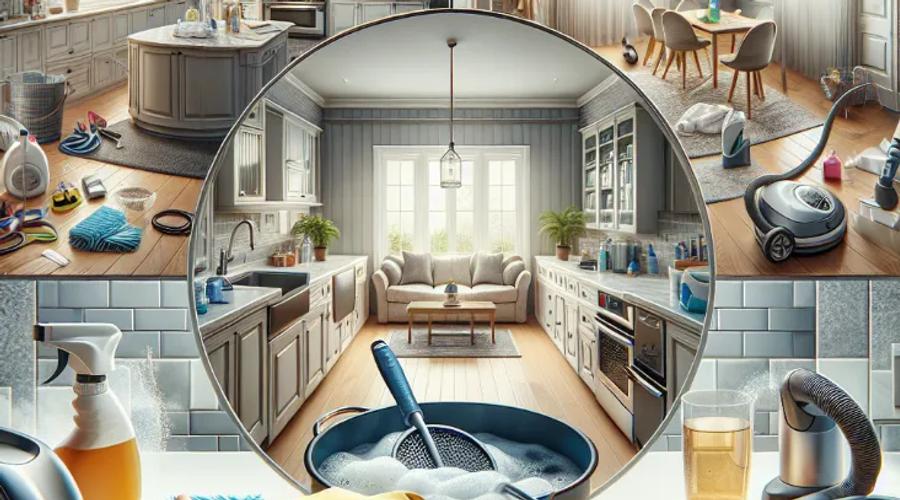
A deep clean means working through every room systematically, top to bottom, cleaning surfaces, appliances and often-missed spots that a quick tidy skips. Most homes take a full day to deep clean properly, or a few hours per room if spread across a weekend. For a faster, guaranteed result, a professional deep clean service can do it in a single visit.
What is a deep clean, and how is it different from regular cleaning?
A deep clean goes beyond the weekly wipe-down to tackle build-up in areas that are usually left alone, such as ovens, skirting boards, behind appliances and inside cupboards. Regular cleaning keeps a home tidy day to day; a deep clean resets it, removing grease, grime, dust and limescale that accumulate over weeks or months.
Most households benefit from a deep clean two to four times a year, or before and after a big life event like moving house, hosting guests, or the arrival of a new baby.
How do you deep clean a living room?
Start by decluttering, then work from ceiling to floor: dust, wipe, and finally vacuum. This order stops dirt from settling back onto surfaces you've already cleaned.
- Declutter surfaces, shelves and coffee tables
- Dust light fixtures, picture frames, skirting boards and window sills
- Wipe down TV screens, remotes and switches
- Clean upholstery on sofas and chairs, including under cushions
- Vacuum carpets and rugs thoroughly, or mop hard floors
How do you deep clean a kitchen?
Clear out the fridge and cupboards first, then clean appliances and surfaces before finishing with the floor. Kitchens hold the most grease and bacteria in a home, so this room usually takes the longest.
- Empty the fridge and pantry, discarding anything expired
- Wipe down countertops, cabinet fronts and handles
- Degrease the stovetop, extractor fan and oven, inside and out
- Descale the kettle and taps
- Clean the sink and bin area, then mop the floor last
How do you deep clean a bathroom?
Scrub the toilet, sink and shower or bath thoroughly, then tackle mirrors, tiles and grout, which show limescale and water stains most clearly.
- Scrub the toilet inside and out, including the base
- Clean and disinfect the sink, shower, bath and taps
- Remove limescale from tiles, grout and showerheads
- Polish mirrors and glass to remove water spots
- Sort toiletries and discard empty or out-of-date bottles
How do you deep clean a bedroom?
Wash all bedding, dust every surface including under the bed, and finish with the floors. A deep-cleaned bedroom should feel calm, uncluttered and dust-free.
- Wash sheets, pillowcases, duvet covers and any throws
- Dust furniture, skirting boards and light fittings
- Move furniture to clean and vacuum underneath, including under the bed
- Vacuum carpets or mop hard floors
- Declutter wardrobes and drawers, removing anything unused
How do you deep clean a home office?
Clear paperwork, dust electronics and sanitise the areas you touch most, as keyboards, mice and desks harbour more germs than most other surfaces in the house.
- Sort and file or recycle unnecessary paperwork
- Dust screens, keyboards and desk surfaces
- Sanitise phones, keyboards and light switches
- Clean windows and blinds
- Vacuum or mop the floor to finish
What are the most commonly missed spots when deep cleaning?
The areas people forget most often are skirting boards, ceiling fans, light switches, behind appliances and inside cupboard handles. These spots collect dust and grime steadily but are easy to overlook because they're not part of everyday cleaning.
- Skirting boards and door frames
- Ceiling fans and light fittings
- Light switches and door handles
- Behind and underneath large appliances
- Extractor fans and air vents
Should you deep clean yourself or hire a professional?
A DIY deep clean works well if you have time and the right products, but a professional deep clean saves hours and covers hard-to-reach areas properly, especially ovens, upholstery and grout. Hiring help also makes sense before moving day, after building work, or when preparing a home for guests or sale.
Cosy Cleaners provides deep cleaning across Northampton and Daventry for homes of every size, working through the same room-by-room process with professional-grade products and equipment. You can view the full range of services or book a deep clean directly online. If you're not sure what your home needs, get in touch and the team can advise on the right visit.
General tips for a faster, more effective deep clean
- Work top to bottom in each room so dust falls onto surfaces still to be cleaned
- Use the right product for each surface to avoid damage, especially on wood, stone and glass
- Tackle one room fully before moving to the next, rather than jumping between rooms
- Open windows where possible to help surfaces dry and air circulate
- Book a professional deep clean for the areas you keep putting off, such as ovens or grout
FAQs
How long does it take to deep clean a house?
A full house deep clean typically takes a full day for one person working alone, or a few hours per room if spread across a weekend. A professional team can often complete the same job in a single visit.
How often should you deep clean your home?
Most homes benefit from a deep clean two to four times a year, alongside regular weekly cleaning. Homes with pets, children or allergy sufferers may benefit from more frequent deep cleans.
What's the difference between a deep clean and a standard clean?
A standard clean covers everyday tidying, dusting and vacuuming, while a deep clean tackles build-up in areas like ovens, grout, skirting boards and behind appliances. Deep cleans take longer but reset the whole home.
Can I book a deep clean for just one room?
Yes, many cleaning services, including Cosy Cleaners, offer deep cleans for a single room such as a kitchen or bathroom, as well as whole-house visits. Check the services page for details or book online.
Do I need to provide cleaning products for a professional deep clean?
This varies by provider and package, so it's best to confirm details when booking. Contact Cosy Cleaners directly to check what's included for your visit.