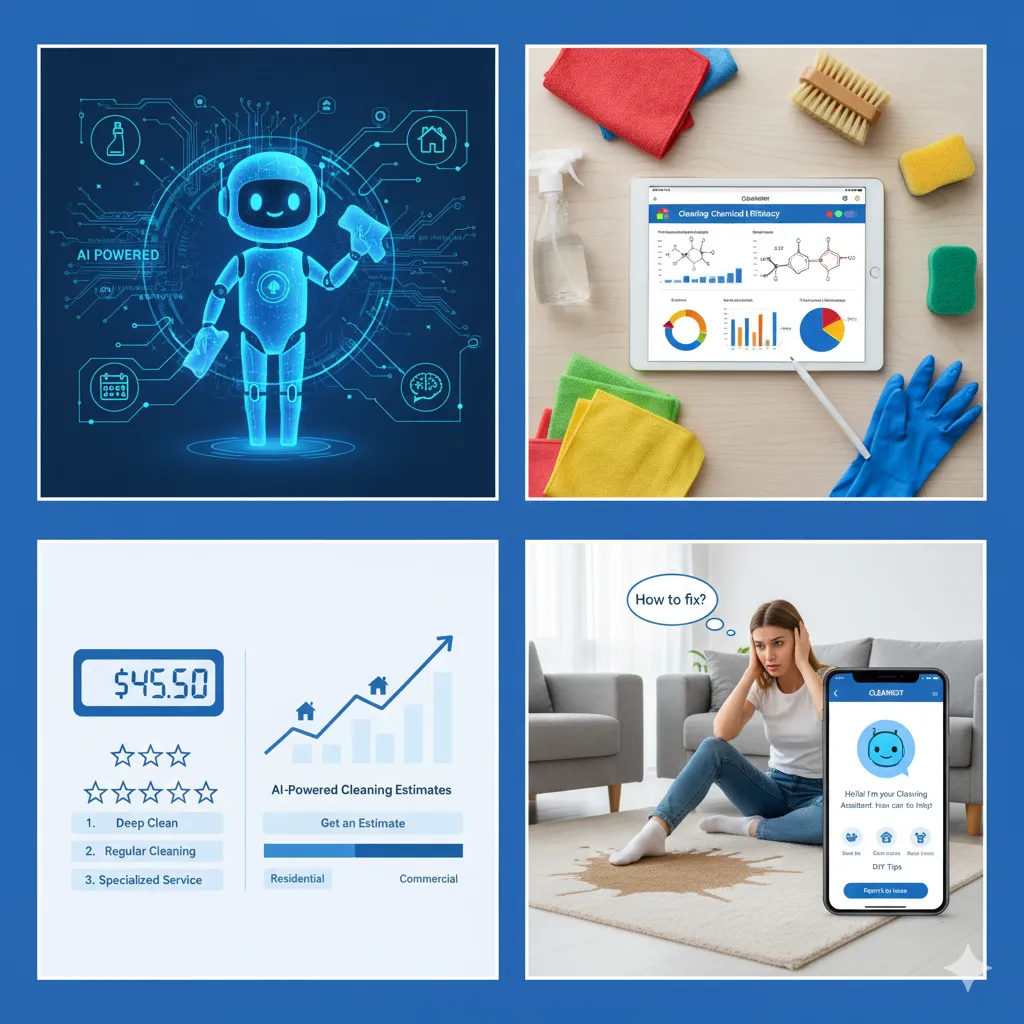
AI Assistant for Domestic Cleaning
The Ultimate AI Assistant for Domestic Cleaning: From Chatbot to Cleaning Guru
In today's fast-paced world, artificial intelligence is revolutionizing every industry, and domestic cleaning is no exception. Imagine an AI assistant that not only answers customer queries but acts as a true "Domestic Cleaning God"—capable of providing precise, context-aware, and actionable advice for virtually any cleaning scenario. This isn't a futuristic dream; it's achievable through a meticulously constructed knowledge base.
This article, the first in a series, lays out the comprehensive framework for building such an AI. We'll explore the structured outline and content categories essential for equipping an AI voice agent or chatbot with an unparalleled understanding of the domestic cleaning industry.
I. Structured Outline & Content Categories
To transform a generic AI into a cleaning expert, its knowledge must be organized logically and comprehensively. Here's a foundational structure:
A. Core Services:This category details every cleaning service offered, outlining what each entails, estimated times, and ideal scenarios.
Regular Cleaning (Weekly/Bi-Weekly):Standard tasks for maintaining cleanliness.
Deep Clean:Intensive service covering areas often missed in regular cleans.
End-of-Tenancy (EOT) Clean:A thorough clean required at the end of a lease, often for deposit return.
One-Off/Spring Clean:A comprehensive clean for specific occasions or seasonal refresh.
Specialized Services:Focused tasks like oven cleaning, fridge cleaning, or interior window cleaning.
B. Technical Knowledge:This is the bedrock of expertise, covering the "how-to" and "why."
Equipment:Detailed information on vacuums, mops, steam cleaners, brushes, etc.
Chemicals/Cleaning Agents:Understanding different types of cleaners, their pH levels, and safe usage.
Safety Protocols:Handling hazardous materials, preventing cross-contamination, and personal protective equipment (PPE).
Techniques (Standard Operating Procedures - SOPs):Step-by-step guides for specific cleaning tasks.
Terminology:Defining industry-specific jargon.
C. Pricing & Sales:Critical for effective customer interaction and business operations.
Hourly Rates:Base rates and variations based on frequency or service type.
Fixed Packages:Bundled services for specific property sizes or types.
Add-on Services:Extra services offered alongside core packages.
Discounts/Promotions:Loyalty programs, new customer offers.
Estimates:Guidelines for providing accurate quotes.
D. Customer Scenarios & FAQs:Addressing common questions and unique situations.
Residential (Houses/Flats):Tailored advice for homes.
Light Commercial (Offices/Retail):Specific considerations for business premises.
Service Issues (Quality, Damage):Protocols for handling complaints and resolving problems.
Common FAQs:Answers to frequently asked questions about services, bookings, and cleaning tips.
E. Operational Strategy:While an AI won't run operations, understanding these aspects enhances its advice.
Scheduling:How booking and service delivery are managed.
Checklists:Quality assurance and scope definition.
Insurance/Liability:Importance of coverage for businesses.
Hiring/Staffing (for context):Understanding the human element behind the service.
By building this structured outline, we provide the AI with a logical framework to categorize and access information. This foundational step is crucial for enabling the AI to retrieve the right information at the right time, paving the way for it to become a truly invaluable asset in the domestic cleaning industry.
